
Upgrading home openings in the Sunshine State involves navigating one of the strictest structural mandates in North America: the Florida Building Code (FBC). Whether replacing single-hung windows in Jacksonville or retrofitting a coastal property in Miami, understanding local wind pressure ratings and wind-borne debris rules is vital before pulling municipal permits.
Installing impact-resistant glass does more than protect your family during major hurricanes—it also directly satisfies mandatory insurance underwriting standards and qualifies homeowners for state grant incentives.
Before requesting contractor quotes, you can estimate regional project expenses using our Florida Impact Windows Cost Calculator, or review grant eligibility rules in our My Safe Florida Home Program Guide.
1. Wind-Borne Debris Region (WBDR) vs. HVHZ Requirements
Florida Building Code divides the state into specific wind zones that dictate the exact impact rating and missile testing standards required for window glass.
Understanding where your county sits on the wind speed map ensures you purchase properly certified openings:
- Wind-Borne Debris Region (WBDR): Defined as areas located within 1 mile of the coastal mean high water line where basic wind speeds are 130 mph or greater, OR any region where design wind speeds reach 140 mph or higher. All exterior glass in this zone must be impact-resistant or protected by impact-rated shutters.
- High Velocity Hurricane Zone (HVHZ): Encompassing Miami-Dade and Broward counties, HVHZ standards are the most stringent in the country. Products installed here must pass the Large Missile Test (TAS 201/203), enduring impacts from a 9-pound 2x4 wooden board fired at 50 feet per second (34 mph).
For a complete breakdown of opening protection options, explore our Florida Impact Windows & Doors Guide.
2. Design Pressure (DP) Ratings & Florida Product Approval
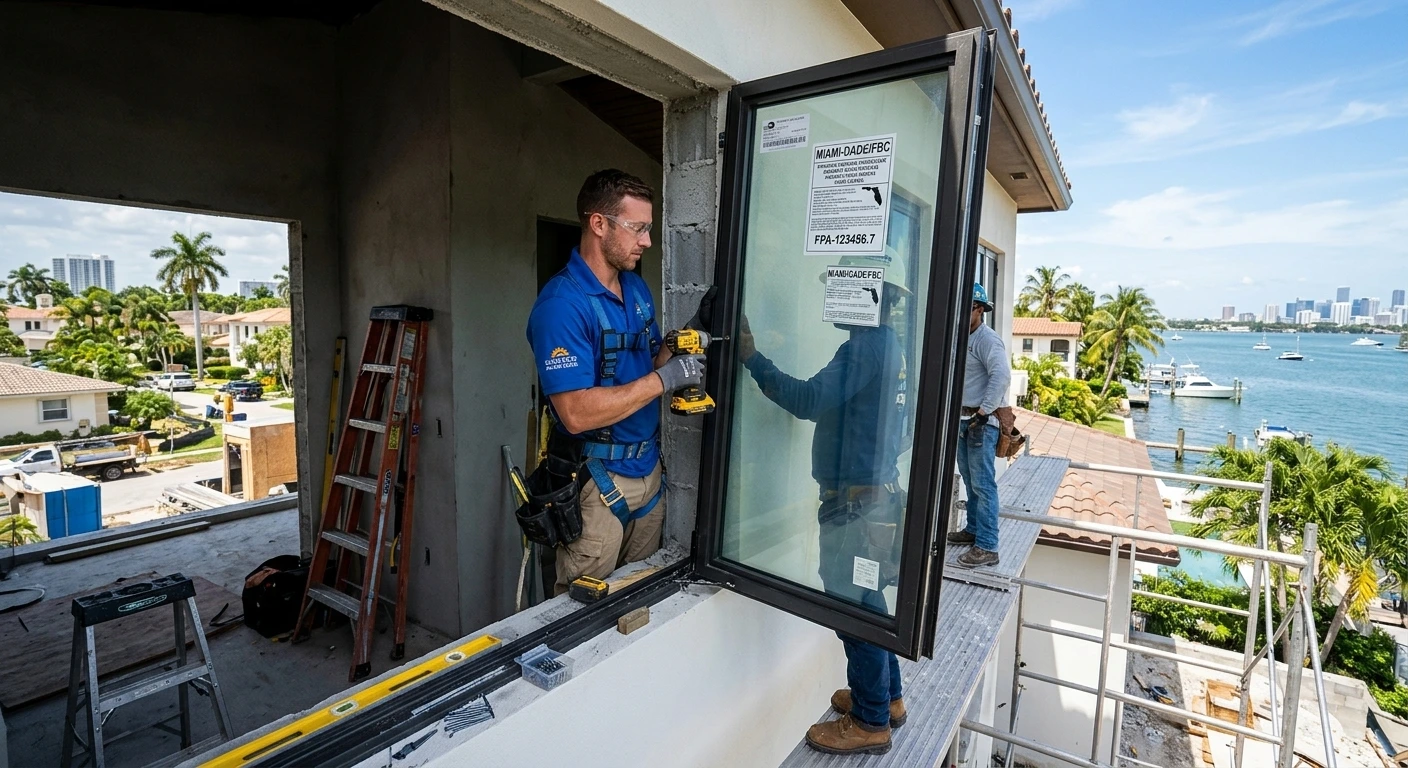
Every impact window installed in Florida must display an active Florida Product Approval (FPA) number or Miami-Dade Notice of Acceptance (NOA).
Inspectors examine the label attached to the window frame during municipal final inspections. Two key structural benchmarks determine code compliance:
| Specification Benchmark | What It Measures | Typical Florida Code Standard |
|---|---|---|
| Design Pressure (DP Rating) | The structural resistance against positive (inward) and negative (outward suction) wind forces. | DP30 – DP50 for inland homes; DP50 – DP70+ for coastal elevated structures. |
| Large Missile Level D | Glass shatter resistance against heavy flying hurricane debris. | Mandatory for all ground floor and second-story openings below 30 feet elevation. |
Installing unapproved window assemblies without an active FPA number will result in a failed building inspection and unclosed municipal permits.
3. How Wind Mitigation Inspections Lower Insurance Rates
Replacing non-impact glass with FBC-compliant impact windows allows qualified inspectors to sign off on Key Feature A1 (Opening Protection) on Form OIR-B1-1802.
To secure maximum wind mitigation credits on your homeowners insurance policy, 100% of all glazed openings—including side windows, sliding glass doors, transom lights, and garage door glass—must meet wind-borne debris protection standards.
To cross-reference insurance compliance rules, check our Florida Wind Mitigation Inspection Guide and review coverage guidelines in our Florida 4-Point Inspection Breakdown.
Frequently Asked Questions (FAQ)
What design pressure (DP) rating is required for impact windows in Florida?
Florida Building Code requires windows to meet specific Design Pressure (DP) ratings based on location, wind zone, and building height. Standard coastal zones typically require DP50 to DP70 ratings, while High Velocity Hurricane Zones (HVHZ) require specialized impact testing under TAS 201, 202, and 203.
Does Florida Building Code mandate impact windows for all homes?
The Florida Building Code mandates opening protection (either impact-resistant glass or certified hurricane shutters) for all new residential construction and window replacement projects located in the Wind-Borne Debris Region (where design wind speeds reach 130 mph or greater).
How does installing impact windows lower Florida homeowners insurance?
Installing code-compliant impact windows across all glazed openings qualifies your home for maximum Opening Protection credits on a certified Florida Wind Mitigation Inspection Form (OIR-B1-1802), reducing annual insurance premiums by 20% to 45%.
Disclaimer: Sunstate Home Costs provides independent home improvement cost data and building code summaries. Municipal permit enforcement and structural wind requirements vary by local building department. Always consult a licensed Florida certified glass or general contractor prior to beginning construction.
Calculate project costs in our{" "} Florida Impact Windows Directory , explore funding in the{" "} My Safe Florida Home Master Guide , or verify local rules in our{" "} MSFH Income Limits Breakdown .